 |
Virginia Society |
 |
Login Container
|
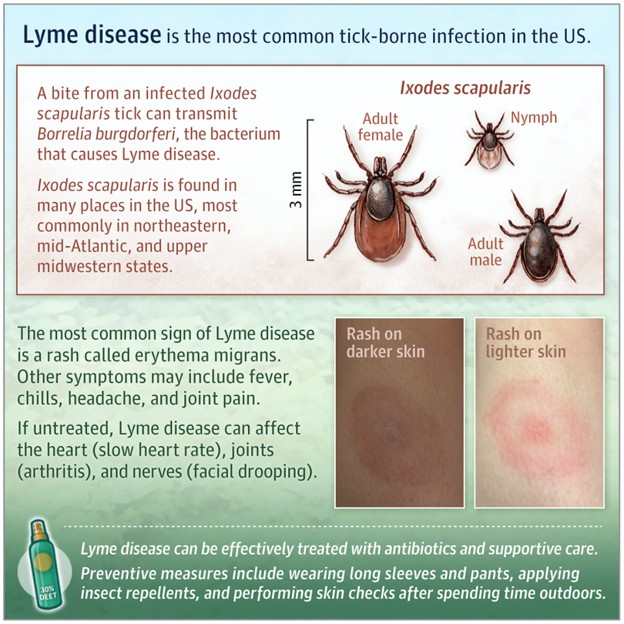
“Lions, Tigers and Bears - Oh My!” or? Lyme, Ticks and Bites - Oh My! If Dorothy from Kansas had known about tick-borne diseases, she might have had a different set of worries while visiting Oz. Tick-borne diseases are illnesses caused by micro-organisms transmitted through tick bites, with Lyme disease being the most common in the U.S. Other diseases include anaplasmosis, babesiosis, and Rocky Mountain spotted fever. The Ixodes scapularis tick transmits the bacterium Borrelia Burgdorferi which causes Lyme disease (LD). Nearly 500,000 people are diagnosed with LD each year and most would be preventable. The mid-Atlantic states are a hot spot for LD and the highest transmission rates occur in spring and summer when outdoor activities increase. Health and quality of life will plummet if you get it. What should I do to prevent it? If you need to be in the woods where ticks are found, wear long-sleeved shirts and long pants with a hat, boots and socks. Apply EPA-registered tick repellent (usually contains DEET) by spraying your clothes and exposed skin. As soon as you are done in the woods and outdoors, remove all clothing and perform a “tick check” of your skin; have a person do an inspection of areas you cannot see, especially your hair, back, and backs of your legs. Gently remove all ticks and shower within two hours of exposure. Ticks that are attached to the skin for less than 12-24 hours are low risk and unlikely to have transmitted the bacteria. A longer time embedded raises the risk and a single dose of doxycycline may be recommended by your doctor. Oops! I forgot to do those prevention things! The most common first sign of LD is a red rash which occurs in 70-80% of people, sometimes forming a “bulls-eye” appearance around the bite. Chills, fever, headache and joint pains occur less often. A longer course of antibiotics (commonly doxycycline) can be given to those presenting later and without rash. When the bacterium has spread, a blood test for antibodies can be done. If initially negative, the blood test may need to be repeated in a few weeks if symptoms persist. If not identified and treated in the earliest stages, the bacteria spreads to heart (irregular beating), nervous system (Bell’s palsy of the face) and joints (arthritis in knees and other joints). In these more serious conditions, intravenous medications are used. So Ben Franklin was right (I’m sneaking in some 250th info here) when he said, “An ounce of prevention is worth a pound of cure.” Medical Tip from Charles Driscoll, MD VASSAR State Surgeon ——————————————————————————————— 1. Patel B, Malani PN. What Is Lyme Disease? JAMA. 2025;334(18):1688. doi:10.1001/jama.2025.13708
|